

 See My Latest Article on HelloNation
Bathrooms have different flooring needs than most rooms. Moisture, splashes, humidity, cleaning products, and bare feet all affect how a floor performs. For most homes in Athens, OH, the most practical choices are porcelain or ceramic tile, luxury vinyl flooring designed for wet areas, and well-installed sheet vinyl.
The “best” option depends on more than water resistance. Subfloor condition, slip resistance, maintenance preferences, installation quality, and the age of the home all matter.
What makes a bathroom floor suitable?
A good bathroom floor should resist water without becoming damaged, slippery, difficult to clean, or uncomfortable underfoot. It should also tolerate regular changes in temperature and humidity.
Important characteristics include:
- Low water absorption
- A surface that is reasonably slip resistant
- Stable performance over plywood, concrete, or another approved subfloor
- Seams and edges that can be sealed properly
- Resistance to common bathroom cleaners
- A surface that does not trap excessive dirt or moisture
Water resistance is not the same as waterproof installation. A floor may resist spilled water while still allowing moisture to reach the subfloor through open seams, poorly sealed edges, or leaks around plumbing fixtures.
Is porcelain or ceramic tile the best choice?
Porcelain and ceramic tile are among the most durable bathroom flooring options. Porcelain generally absorbs less water than standard ceramic tile, making it especially useful in bathrooms, laundry areas, and other spaces where moisture is common.
Tile works well because it:
- Resists water and staining
- Holds up to frequent cleaning
- Comes in many sizes, colors, and textures
- Can last for decades when installed over a suitable base
- Works with electric floor-warming systems made for tile
The main difference between porcelain and ceramic is density. Porcelain is fired at a higher temperature and is typically denser, while ceramic tile may be easier to cut and may offer more design choices at a lower material cost.
Tile has drawbacks. It can feel cold, especially during winter, and hard surfaces may be uncomfortable for anyone who spends a long time standing. Grout lines also require periodic cleaning. Large tiles can reduce the amount of grout, but they require a flatter subfloor and careful installation.
For a bathroom floor, a smooth, glossy tile is not automatically the best option. Textured or matte surfaces usually provide better traction, although very rough tile can be harder to clean.
Is luxury vinyl flooring a good bathroom option?
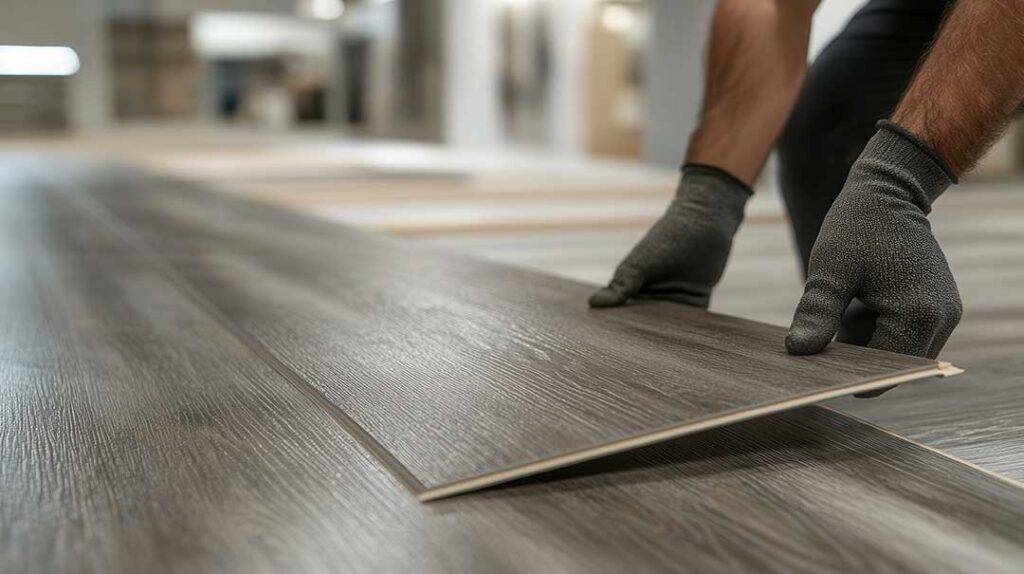
Luxury vinyl flooring can be a practical choice for many bathrooms, particularly when comfort, easier maintenance, and a warmer feel underfoot are priorities. It is available in plank and tile formats and can imitate wood, stone, or ceramic surfaces.
Its advantages include:
- Softer and warmer underfoot than tile
- Simple routine cleaning
- Many pattern and color choices
- Less grout maintenance
- Installation over some existing floors, depending on condition and product requirements
Not every vinyl product is equally suitable for a bathroom. The flooring must be rated for the intended use, and the installation must address seams, perimeter edges, doorways, and the area around the toilet. A floor marketed as water resistant may still allow damage if water sits underneath it or enters through unsealed joints.
Floating vinyl floors also need room around the perimeter for movement. Baseboards, trim, and transitions should be installed in a way that protects the edges without pinning the floor incorrectly. In a small bathroom, careful attention to these details is often more important than the pattern printed on the surface.
What about sheet vinyl?
Sheet vinyl remains one of the more moisture-conscious choices for bathrooms because it can have fewer seams than plank or tile flooring. A properly installed sheet may help limit the routes water can take toward the subfloor.
It is especially useful in:
- Small bathrooms with simple layouts
- Older homes where minimizing seams is helpful
- Rooms needing an economical, easy-clean surface
- Bathrooms used by children or older adults, where a softer floor may be preferred
The subfloor still needs to be smooth and stable. Sheet vinyl can show ridges, fasteners, dips, or other irregularities beneath it. Seams, if required, should be positioned carefully and sealed according to the flooring system’s instructions.
Although sheet vinyl is resilient, sharp furniture legs, dropped objects, and abrasive cleaning can damage the wear layer. Felt or suitable protective pads under furniture can help prevent unnecessary marks.
Are laminate, hardwood, or carpet suitable for bathrooms?
Traditional hardwood and most standard laminate flooring are usually less forgiving in bathrooms than tile or vinyl. Wood can absorb moisture, swell, cup, or develop staining if water reaches the joints or remains around fixtures. Modern water-resistant laminate products may perform better, but product limitations and installation requirements must be followed closely.
Carpet is generally a poor choice for a full bathroom. It holds moisture, dries slowly, can retain odors, and is difficult to keep hygienic around toilets and sinks. A removable washable mat is more practical than wall-to-wall carpet.
Natural stone can be used in a bathroom, but it requires more planning. Some stone surfaces need sealing, and polished stone can become slippery when wet. Stone may also need specialized cleaning products to avoid etching or discoloration.
How does the local climate affect bathroom flooring?
Homes in Athens experience humid summers, cold winters, and seasonal moisture tracked indoors. Those conditions do not make one flooring type automatically correct, but they do make installation and ventilation important.
Bathrooms should have effective ventilation, especially after hot showers. Persistent humidity can affect trim, adhesives, subfloor materials, and grout. In older housing, uneven floors or previous water damage may also need attention before new flooring is installed.
During winter, tile can feel noticeably colder than vinyl. Electric floor warming can improve comfort under tile, but the system must be compatible with the tile assembly and controlled safely. It should not be used to compensate for an unresolved moisture problem.
Which bathroom flooring is safest for older adults and children?
Slip resistance matters more than whether a floor looks smooth or textured. Water, soap, and bath products can make nearly any surface hazardous, especially near a tub or shower.
For improved safety:
- Choose a floor with a moderate, tested slip-resistant surface
- Use securely backed bath mats rather than loose rugs
- Wipe up standing water promptly
- Avoid highly polished tile
- Keep grout and textured surfaces clean so residue does not build up
- Make sure transitions are low, stable, and clearly visible
A very rough surface is not automatically safer. Excessive texture can make cleaning difficult and may create small areas where moisture and residue collect.
What should be checked before replacing the floor?
The existing floor should be inspected before selecting materials. Look for soft areas, swelling, musty odors, cracked grout, loose tile, staining near the toilet, and movement underfoot. These signs may indicate moisture damage below the visible surface.
The toilet flange, tub or shower edge, sink cabinet, door clearance, and floor height at adjacent rooms also affect the project. A thicker tile assembly may require an adjustment at the doorway, while a new floor may change how the toilet sits against the finished surface.
For many households, the most balanced choices are textured porcelain or ceramic tile for long-term durability, or a bathroom-rated vinyl floor for easier maintenance and greater comfort. The material matters, but a sound subfloor, well-sealed edges, proper ventilation, and careful installation often determine whether the floor performs well over time.